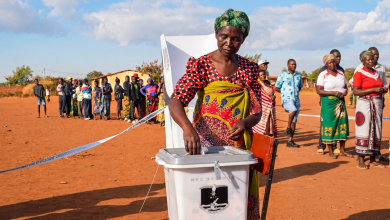
Next September, Malawi will hold elections for president, members of Parliament (MPs) and
councillors. Official campaigning will only start in June, but unofficial canvassing has already
begun, which is worrying the LGBTQ community.
John (not his real name) from the lakeshore district of Mangochi, is a close friend of Jana
Gonani, a transgender woman and sex worker who is serving an eight-year sentence at a men’s
prison for “false pretense” in presenting herself as a woman and for committing an “unnatural
offence” contrary to Section 153 of the Penal Code.

Section 153 reads: Any person who (a) has carnal knowledge of a person against the order of
nature, (b) has carnal knowledge of an animal or (c) permits a male person to have carnal
knowledge of him or her against the order of nature shall be guilty of a felony and shall be liable
to imprisonment for 14 years with or without corporal punishment.
While the law itself frightens John, he said he is more worried about politicians reminding
constituents that it exists.
“Sometimes people forget we have such laws. When politicians talk about them during
campaigns, we are doomed,” he said. “It is a relief that government has cooled on
homosexuals, but since they want votes, they will come back.”
John is referring to a 2012 government decision to issue a moratorium on enforcing anti-
homosexuality laws. Then Minister of Justice and Attorney General Ralph Kasambara said with
the temporary suspension of the laws, police were not mandated to arrest people who violate
these laws.
But Centre for the Development of People (Cedep) executive director Gift Trapence said despite
the moratorium, homosexual people are still being arrested, threatened, and even injured.
In June, Gonani and another man convicted under Section 153 Dutch national Jan Willem Akster
went to court to challenge the constitutionality of Malawi’s anti-homosexuality laws.
The Constitutional Court ruled that Penal Code sections 153, 154, and 156 remain

constitutional. The three-panel judges went on to say that if people are dissatisfied with the
laws, they should lobby their MPs to change them.
John recalled an incident at a political rally in his district of Mangochi in July.
“When I went there, I expected to hear what they would do for the area. To my surprise, they
talked about the LGBTQ community. They said homosexuality is foreign and that if there are
some practising it, they should either be dealt with or chased from the area. I immediately left,”
John said.
One of Malawi’s human rights organisation, Centre for Human Rights and Rehabilitation (CHRR)
executive director Michael Kaiyatsa says the fate of Malawi’s LGBTQ community remains
precarious as the general election approaches, especially after the Constitutional Court ruling
that upheld the crimimalisation of same-sex relations.
Kaiyatsa said religious leaders are further imperilling the LGBTQ community.
“Before the Constitutional Court case, they organised large anti-LGBTQ demonstrations,
intensifying societal stigma and pressuring judges to adopt regressive legal positions,” he said
of Christian and Muslims demonstrations against same sex marriage in July last year. “This
public sentiment creates a hostile environment for LGBTQ individuals, particularly during
election campaigns when populist rhetoric often exploits these views for political gain.”
Drawing on his experience of past elections, Kaiyatsa predicts Malawi will see an increase in
cases of abuse, violence and discrimination based on real or perceived sexual orientation or
gender identity. His prediction underscores the urgent need for vigilance and advocacy.
“Politicians must understand that upholding human rights for all—especially marginalised
groups—is essential for fostering a just society. As we move forward, the call for inclusive
policies and respect for diversity must be prioritised in political discourse,” Kaiyatsa said.
Kaiyatsa added that the Constitutional Court’s suggestion that people lobby to change the laws
strikes as disingenuous.
“Given the current societal attitudes towards LGBTQ issues, many MPs would be hesitant to
support such law reforms due to fears of public backlash or losing their seats,” He said. “This
creates a significant barrier for meaningful change as MPs often prioritise their constituents'
views, which, at the moment, do not align with the need for progress on these issues. So while
lobbying is theoretically possible, the political climate makes it quite challenging.”

Leaders at Nyasa Rainbow Alliance (NRA), an organisation that fights for equal rights for the
LGBTQ community, said they have every reason to be afraid of the upcoming elections.
“The concerns of the LGBTQ community regarding the upcoming elections are valid, especially
given that their issues have frequently been politicised in Malawi,” said Eric Sambisa, NRA’s
executive director. “Politicians may exploit conservative attitudes toward the community to
gain support, creating fear and fostering an environment of hostility. The LGBTQ community
already faces significant stigma and discrimination and using them as a campaign talking point
may exacerbate the situation.”
Sambisa noted widespread misinformation regarding the outcome of the Constitutional case on
LGBTQ rights, which adds to existing tensions. He called on government to put in place
protective measures to ensure that all communities, including the LGBTQ population, can
participate in the voting process and have the opportunity to run for office without fear or
discrimination.
“Additionally, the current design of the electoral process excludes some members of the
population as it only recognises male and female categories, leaving out individuals who do not
fit into these binary gender definitions. This creates barriers to their registration and
participation, which must be addressed to ensure an inclusive and fair election,” he said.
Father Martin Kalimbe of the Anglican Church in Blantyre says the LGBTQ community can only
be safe if people love one another. He said it is only God that can judge someone, and the
church’s role is to embrace everyone.
“The threat is real,” Kalimbe said of the dangers next year’s elections pose for gender and
sexual minorities in Malawi. “The LGBTQ community has been used as a scapegoat to score
political goals by politicians all over the world. Religious leaders need to preach about
embracing diversity, politics of inclusion and co-existence. We were all created in the image of
God, and no one should be discriminated and stigmatised because of his sexual orientation,
which is a God-given gift. Everyone should be respected.”
Spokesperson for the Malawi Electoral Commission (MEC) Sangwani Mwafulirwa said he has
not received any complaints from the LGBTQ community, and that they are assured of their
right to vote.
“As we move towards elections, all eligible voters are assured of their right to participate and
the LGBTQ people will be protected and preserved within the laws of Malawi. Any violation
should be reported to appropriate authorities,” Mwafulirwa said.